One day Alyssa came home and said, “Don’t ever burn another candle unless it is soy.” Being an avid candle burner, I looked at her like she was an alien from another planet. She swiftly defended her statement.
“Mom, I’m serious. Today I learned that candles like we buy are really bad and they are going to kill us.”
“Where did you learn this, Alyssa?” I calmly asked almost knowing what her answer would be because lately she keeps bringing home an abundance of this type of information.
“The ladies at work. You know they are very into the natural and organic stuff,” she replied matter-of-factly.
Without saying a word, I thought, “Ohhhhhh, THOSE women!” I’m pretty sure that the women at Alyssa’s job have no idea how they are changing our lives. Alyssa takes every one of their tips to heart and wears me down until I comply.
“Okay, tell me why I should not burn paraffin wax candles.”
At a rate of about five million words a minute, Alyssa proceeded to tell me all the reasons that we were never going to burn another paraffin wax candle. After her presentation, because it was a full blown presentation, she had convinced me that I needed to look into this matter further. Of course, what I have learned, I’m going to share with you.
The research facts can be found by downloading the document at the Environmental Protection Agency website, but since it is rather long and I have read it all (yes, I read the WHOLE document), I’m going to post a few of the key points that I think will pique your interest.
What Is Paraffin Wax, Soy Wax And Beeswax?
Candles are made from many products, but predominantly paraffin wax is the most common. Paraffin wax is a petroleum by-product that is created from the sludge waste when crude oil is refined into gasoline. Sounds a bit gross.
There are also soy wax candles which are made from the oil of soybeans, so it is a vegetable wax. Soy wax is a renewable resource. Most of the world’s soy beans are primarily grown in Illinois, Iowa, and Indiana. Soy wax candles burn slower and not as hot as paraffin wax candles . Actually, soy wax candles burn up to 30 to 50 percent longer.
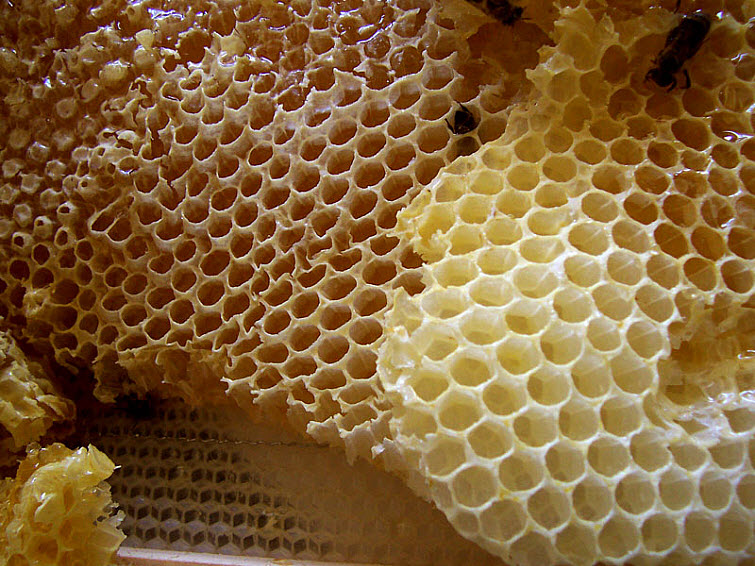
Another type of candle that is a renewable resource is made from beeswax. Obviously, beeswax is made by honeybees. The wax is a secretion from the glands on the underside of their abdomens and is used for the construction of the honeycomb. That’s kind of gross sounding too if you don’t like bugs, but at least it is natural and clean. Besides, there are not many things more beautiful than a honeycomb, you know? Anyway, the beeswax candles last up to three times longer than paraffin wax candles and twice as long as soy candles of the same size.
The Facts About Paraffin Wax Candles
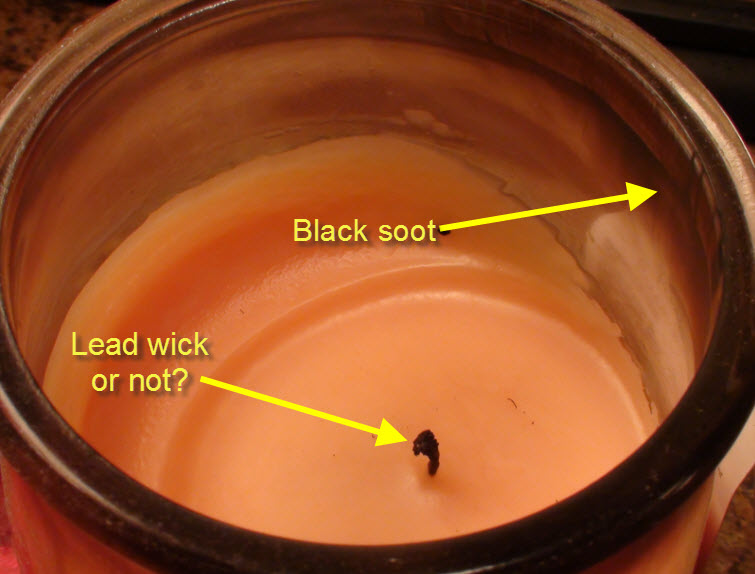
From the United States Environmental Protection Agency Research and Development in the January 2001 article titled, “Candles and Incense as Potential Sources of Indoor Air Pollution: Market Analysis and Literature Review,” I learned that “most” manufacturers in the United States have agreed not to use lead in the wicks of candles. “Most” bothered me. What bothered me even more is that 34.8 percent and 13.4 percent of candles imported are from China and Hong Kong respectively where the rules and regulations do not include strict adherence to the same standards as United States candle manufacturers. That is just a nice way of saying that there are many toxic substances in candles imported from China and Hong Kong.
According to the EPA’s research, “Candles with lead wicks have the potential to generate indoor airborne lead concentrations of health concern. It is also possible for consumers to unknowingly purchase candles containing lead wick cores and repeatedly expose themselves to harmful amounts of lead through regular candle-burning.”
They also go on to say that regardless of the lack of lead, burning several candles exceeded the EPA’s standards and posed an increased risk for cancer because of the acetaldehyde, formaldehyde, toluene, benzene and acrolein levels. All those chemicals, along with many others are not healthy or good for our bodies and most especially our lungs.
Paraffin wax candles also produce soot – that black stuff caused from the flickering flame. “When soot is airborne, it is subject to inhalation. The particles can potentially penetrate the deepest areas of the lungs, the lower respiratory tract and alveoli (Krause, 1999).” Alrighty then! That pretty much scared me because I truly value the fragility of lung tissue after watching my great grandfather, Daddy Cecil, die of emphysema.
Not only are people with asthma more susceptible to the effects of burning paraffin wax candles, but also the elderly and children. Science has proven that a child’s tiny body is negatively affected by chronic low-level lead exposure. Burning paraffin wax candles that contain lead wicks is definitely in the category of low-level lead exposure.
Low-level exposure to lead mainly affects the central nervous system and can cause:
- neurobehavioral changes
- hypertension
- kidney disease
- increased depression
- phobic anxiety symptoms
- mood and personality changes
- irritability
- aggressiveness
- changes in sleep patterns
- hyperactivity
- learning difficulties
- difficulty concentrating
- memory loss
- lethargy
- loss of appetite
- difficulty breathing
Are you looking at those candles sitting on the shelves of your home a little differently now?
How To Set The Mood Without Paraffin Wax Candles
Obviously, I love candles especially when I’m trying to relax. As much as I have initially bucked against all the changes that Alyssa has introduced to me because of the women at her work, I am actually thankful for the information and have incorporated most of it into our home.
I still have a few paraffin wax candles left, but I haven’t lit them since I read about the harmful effects they can cause to my body. The part about penetrating the deepest areas of the lungs with harmful chemicals just doesn’t thrill me much, so the candles just sit and look like pretty colored globs in glass containers. (rolling eyes)
Soy and beeswax candles are wonderful alternatives to lighting paraffin wax candles.
Think about it…is that tiny flickering paraffin wax flame really worth the risk to your health? Maybe it is time for a change.







Oh my…factor in the fire hazard concerns and those battery powered candles are begnning to look good.
Yep, Carol. Obviously, all that information completely changed my mind. 🙂
Except then you have to deal with the issue of disposable batteries, or if you use rechargeable ones, how was the electricity generated that was used to manufacture and then charge them. You may have avoided the immediate local health threat, but just shifted it back onto the population as a whole. I’m trying to preach, just pointing out that there are no easy alternative choices.
Thanks Matt. I agree – nothing is easy anymore.
There is a lot of misinformation about SOY vs: Paraffin and a lot of it in this writing. There are studies that show there is no difference in hazard between any of the commonly used waxes.
Just as with many things, there are different grades of products and Paraffin is definitely one of them. As a candle manufacturer, we could choose to use the same Paraffin product that the largest candle producer in the world and many other manufacturers use and save about 37% in wax cost. We could also use “Grade B” fragrance products and save 35-40% and also cheaper dyes.
Paraffin, being a Petroleum Product is not exactly true. It is a product that is contained in oil and is extracted (called de-waxing). The paraffin is refined from there to meet different needs, known as partially refined and fully refined. Premium Paraffin Candles, such as the one’s we produce , use ONLY Fully Refined Paraffin which is Food Grade.. Yes, it is totally ingestible as it is similar to what is used on candy. Think of that next time you eat an M&M!
If you go and smell these candles, you will smell the different fragrances but, if you pay attention, they all have a similar smell in the background. This is the wax and dyes. The big candle companies also do what is known as “Top Loading” where just a shot of fragrance is injected at the top of the pour to save money. This is why the scent starts to dissipate a few hours into the burn. Fragrance is generally the most costly component of any candle.
If you want to look at how hazardous SOY is: Most SOY produced for candles is processed by soaking the bean in Hexane which is a Petroleum Solvent. The oil is extracted and the Petroleum soaked remains are use to feed the animals we eat. Now, seeing that the SOY is only a Semi-Solid at this time, chemicals need to be used to get it to the desired hardness. SOY candles DO NOT burn longer than a Premium Paraffin candle and they do “Soot”. Take a SOY candle and put it on a white surface (we used a solid white counter top for this) and burn it. After about 3 hours of burning, we dropped the lid on (proper method) to extinguish the candle, waited for it to cool and picked it straight up. Looking across the counter with only window light coming in, it was quite evident that the SOY candle produced what is known as “Clear Soot” also noted by “The National Candle Association”.
We experimented with SOY and have many cases piled in the corner. We refuse to burn them and if we won’t burn them ourselves, we won’t sell them!
I noticed that you had no response to Robert’s post which is very accurate. Not ALL paraffin wax is bad. I appreciate the info, most of which I knew already but let’s face it, the air we breathe is full of chemicals, especially if you live closer to a city, so why be so paranoid about paraffin candles??? If that is the case, I really hope you are watching what you are eating as well.
http://www.candle-licious.com
Oh my. Thank you for the perspective! I know that every argument has a counterpoint and it’s nice that this was included in the comments. It relaxed me a bunch. Thanks!
Thanks Robert! Know that your comments were posted back in 2015, but appreciate your candid response from the perspective of a true candle maker. I used to make quite a few candles just for my own family enjoyment and find the dramatic comments about using parafin and lead core wicks as considerably over-the-top. Lead core wicks were very helpful to me to properly install a relatively straight wick into your candle mold.
Unrelated to the article, do you know a refinery in the vicinity of Denver where someone can purchase a case of parafin wax?
Thanks.
Great things to note. Also note that MOST soy is GMO soy. So, add pesticides to the list of things you are burning and inhaling and remember – no studies done doesn’t mean it is not hazardous.
Think of it this way …
as soon as I smell one of those fragrant candles or o e of those lamecass duraflame fake foreplace logs from down the block, I instantly within 2 seconds get a chemical feeling headache and it’s bad.
It happens every single time.
that can’t be good for you even if dont get a headache (i dont normally get headaches either…)
Your input is absolutely obsolete, moreover out-of-date. . .only an internet troll would disagree lol this nice woman is trying to protect humans who actually care about their body. If your one of those people who dont care about adding toxins to your body, be my guest. But dont prey on the innocent because you wanna sell candles to make a PROFIT. Nor that others would rather try to lay off the wide variety of carcinogens that help make up today’s massive percentage of cancers & such. Yes. Im talking about food additives, pollution we add to the air, fragrances & detergents. The paraffin only adds to this long list of things we; humans choose to expose our bodies to. Think wisely about your life choices. Its better to be safe than sorry later on in life.
Actually, you’re the true troll in this scenario. You provide no evidence of your claim and yet call out those who are more educated in the matter. Please site your resources of evidence and I’ll gladly accept your premise.
Thank you Robert! Same principle applies to fragrance ingredients. It’s a fallacy but many believe that essential oils are better than synthetic. When in actuality, essential oils are comprised of many chemicals/components. 18 out of the 26 noted allergens are found in many essential oils. Millions upon millions has been spent on research over many years to test the safety of fragrance ingredients. Essential oils have limitations on usage for photo toxicity, skin irritations etc.. So much misinformation out there, and often because of other motives.
For those looking for beeswax candles, I cannot say enough good things about http://www.beeglow.com Probably not a local source for many (as we live in the mountains of western North Carolina), but a great family owned business making great products. Highly recommend!
Thanks!
Help. I cant make the sharing work and ihave alll thoose candles everryday &. Symptoms galore.
Virginia, All you have to do is click one of the options on the sharing bar, let it connect to your account and then another box will pop up allowing you to share. You can change what is already written in the share message too. Does that help?
Great post. I stopped burning paraffin candles years ago for these reasons. Thanks for sharing.
Years ago Stéfan? Then why didn’t you tell me to stop?! LOL 😉
First of all, the mushrooming on the top of the candle wick is not a sign of lead…..it is a sign that the wick might not be thick enough and or the fragrance used as too many solid materials which are being deposited on the tip of the wick……as for the black soot, that can be caused by any number of ways…….check with an expert before posting fallacies.
Bepe
Great information, thanks!
I started using soy candles about a month a go, but didn’t have all this info to hand…just we live in a duplex where whatever I’ve cooked seems to hang in the air and candles + oils clear it.
Will be sharing this article – more people need to know about this (by the way Febreze is also REALLY bad for you…read about that a little while ago…it’s especially aggravating for people with asthma and breathing difficulties – I stick to natural oil cleaners in my house).
Cheers
Sarah
A Mom On A Spiritual Journey
Sarah,
Yes, I read all about the cleaning products and the ones that are made just to cover up odors. They are all adding chemicals to our air and are not good for our lungs. I actually try to open my windows and let the air rush through at least once a day to refresh the air. It seems to help.
I’m glad you enjoyed it and thanks for sharing it with others!
Woah – I always wondered what the scoop was on the beeswax, soy, paraffin candles.
ty for condensing it for me!
Glad I could help, Kathy!
Thanks as always for your clear distillation of a lot of information into a precise, clear statement of facts. It’s good that we can discriminate between safe & harmful wax, & at least hope that the wicks are lead-free.
When I lived in Ethiopia, I got used to hand-made beeswax candles. On top of their warm color, they smell wonderful!
Skip,
Thank you.
I need to find a good source of beeswax candles around here. I would like to have candles that are made from local honey. Surely there has to be some benefit from that because I know eating local honey is great for helping with allergies. Don’t you just love the honeycombs?!!!
Yes, honeycombs are great! I love honey, & wish I could keep bees! I’m fortunate to have a local honey supplier a block (yes, *1* block!) from my apartment! I think they have candles for sale too… & I may see if I can get wax & dip my own! 🙂
That sounds fun and how lucky are you to have local honey soooooo close!!! I made candles when I was a teen, but I don’t remember a thing we did. LOL
I was rereading this post and noticed the comment about Febreeze. My dog’s groomer told me that even though it is advertised for use on bedding, particularily where pets lie, many pets are allergic to it. My springer has recently developed an allergy to something and I’ve stopped using air fresheners too. I never thought about all that perfume being spritzed at her, everytime she walked by, until now.
Love what you’re doing here…I find myself checking in every day now!
I’m so glad you visit every day! Thank you very much.
I haven’t used air freshener for a long time because of my allergies. They are just too strong and I knew they couldn’t be good for us either. I’m so glad Alyssa tells me all this stuff. LOL
Well daughter, I am not going to give up everything in life because you prove I am going to die. The other candles hurt my purse. I love Yankee Candles! LOL
Today you told me that you wanted me to give up my only vice – Coke. I’ve got to die sometime of something! LOL
mom
Mother,
You drive me nuts LOL
Of course you have to die, but you don’t have to hasten it!
Quit using those candles and stop drinking the Coke. LOL LOL LOL
I don’t burn candles at all presently. In an emergency, I have homemade ones that are made with beeswax (which comes from local bees). This is good information for you to share. I think you are probably glad that your daughter made you aware of this issue with the paraffin candles. Especially since you have health issues of your own. Better to be safe than sorry.
Katlupe,
Yep! I sure am glad she told me and we aren’t going to do the paraffin wax kind any more. Why doesn’t it surprise me that you use locally made beeswax candles? 😉
We have a neighbour who makes barbecues in his very small garden from old oil drums which he burns with paraffin to clean them. He then cooks burgers to sell to the public. If our windows are open, the paraffin smell permeates through the house making us very sick and head achey and causes breathing difficulties. My husband also suffers with migraines which have increased since we have lived in this house and seem aggravated by the smell. We are both in our seventies. The local Council has not taken any notice of our claims. Can you tell me what health disorders this is likely to cause.
Jo Evans (Mrs)
Ewwwww! That sounds terrible! I would think that smelling the fumes from his barrels would cause the same effects as burning the candles. Of course, if it is super strong, I would think it is even worse than the candles. I’m sorry! Surely your city council can help. Don’t give up!
Hi,
I own a small candle company. We hand make our own candles from paraffin wax and use lead free wicks. I don’t think paraffin wax is bad nor has it been proven. Based on the EPA recommendation it states the products that are shipped in from China. Soybeans are hydroginally manufactured and have chemicals in them as well that have been approved by the EPA. A lot of the EPA officials are from companies that manufacture soybeans, hence the promotion of soy. Soy isn’t as ‘natural’ as some would want.
The fact still remains that paraffin wax is a petroleum by-product that is created from the sludge waste when crude oil is refined into gasoline.
I just prefer not to have that floating around me if I can help it.
its not from sludge waste, and do you have any idea how many products are made from crude oil? Its hundreds, in things you likely don’t even know. Besides I figure if paraffin is used as a food grade product unlike soy wax, it can’t be that bad.
Curious people have the idea how many products are made from crude oil, Asphalt, and almost all the plastics, for example. And besides that plastic is a useful material it isn’t good at all in the long run not only for it’s micro- and macropollution but for many more reasons…
Your “…it can’t be that bad” is everyday Joe iconic!
Maybe it isn’t THAT bad but usefulness and low producing costs doesn’t make some thing healthy.
The whitewashing mark “food grade” so-called big money bought for some of less toxic petroleum products doesn’t make any crude oil product edible.
Has Man ever been able to make the inedible edible, or only a wonderful Nature that man can only partially imitate, in spite of his “omnipotent” science?
I totally agree. I’ve been burning paraffin candles for YEARS and have been making paraffin candles for about 10 years. I use food grade paraffin. My candles do not smoke unless I don’t keep the wicks trimmed, but any candle will smoke if you don’t trim the wick…including soy. My wicks are lead-free (fyi: Lead wicks have been banned in the US). I just think this is all a bunch of “hype”. Check out the National Candle Associations website – they compare paraffin, soy and beeswax and they VERY CLEARLY STATE THAT PARAFFIN WAX IS NOT DANGEROUS OR AN INFERIOR WAX! I know folks will believe what they want to believe, but I encourage you to do your own reading and not just jump on the “paraffin is bad” bandwagon because someone tells you it’s bad.
Thanks Roberta for your opinion!
So, the lobbying group for candle manufacturers says its clients’ products aren’t harmful? Color me shocked.
LOL Jake
I hope you are talking about the soy industry. There has been such a campaign spread lies and misinformation about paraffin that many consumers actually thought soy was better. Personally I prefer blended candles as soy has lousy scent throw, and it IS NOT soot free just because the smoke is white. There is a lot of misleading information on here, I don’t get why in some situations people are so easily mislead. Can anyone on here show me one case where some one has died from paraffin wax candles, which has been used for hundreds of years? Also soy is not totally natural as in most cases it is processed with chemicals. If you want truly chemical free candles your option should be bee’s wax. Find an UNBIASED source and see for yourself.
1) Chris P – You pointed out exactly this sneaky thing about paraffin (and about other man-made chemicals): having only little (trace) amount of poisonous materials (e.g. solvent residues) they don’t kill you at once. But some of those residues with all other residues from all those other sources in our food and environment ACCUMULATE in the body, causing excessive inflammation and other harm. We have historically accustomed to nature poisons, which isn’t the case for all sorts of artificial disruptive chemicals our organism doesn’t know how to manage.
2) There is also the compounding effect from using exponentially more amounts of new man-made chemicals from ca y.1900. Despite its costliest health (or disease management?) budget, the sickest population in the world lives in the USA: cancers-Alzheimers-diabetes-autoimmunes… – you name it – the strange, “unexplained” diseases, emerged in nearest ca 100 years.
3) “Hundred of years” (if not thousands) we are used only natural BEESWAX candles, causing more good than harm.
4) About misleading – people are VERY EASILY misled! Not “in some situations” but “most types of them” (e.g. believers). All the more so as almost the entire sales industry is engaged in, with all their highly paid high-IQ employees!
For example, see the vaccine queues in July 2021 despite all those accumulating scientific counter-arguments. True, vaccine industry has been able to nicely censor or block out most of them from mainstream. But they are still present, e.g. in non-mainstream web, one just must click some more to reach them!
Hooray!!! Someone who speaks some common sense
LOL
Roberta, this is what happens when people use biased information from the soy industry and state is as fact. I questioned another writer on another site that was stating all these facts about how parafin will cause nuclear fallout and how soy is the gift from the gods and can do no wrong. What was interesting was when you look at her sources it was write ups taken from a couple candle makers who were soy candle makers. Talk about a lobbying group, soy has really worked hard on this one, and apparently it is working as people read stuff like this and assume it is right. One should always find unbiased sources and research for themselves.
I make my own candles. I use several different varieties of wax. I even use paraffin. The information spread about paraffin is a joke. First off, if you are getting migraines or having breathing problems from a candle it is most likely the scent used. Not every scent is the same. I even have some scents that give me migraines. I have several people who use my paraffin candles who have asthma, alIergies, emphysema, and other breathing problems. None of them have had issues with the wax. A few scents have set off allergies and things of that nature. I have been making paraffin candles and burning them for over 35 years. My lungs are perfect. I burn a lot of candles daily. Soy candles are not as natural as the soy industry tries to make people believe. Theread are things called gmo”s and the whole chemical process it goes through to make them. I am also going to point out that most people probably drive a car. Do they even understand the amount of pollution a car creates? Also, the cleaners they use in their house, laundry detergents, fabric softeners, and I could really go on all day. Most people don’t burn candles like I do. Such a shame there are people like this trying to create a false panic.
Not trying to cause panic. Just sharing what I’ve read and heard. Thanks for your comment.
The whole “paraffin wax candles are bad” started when they wanted to sell more soybeans. Coincidence? I think not.
Hi from Germany!
I believe this is all scaremongering as there as many websites saying paraffin wax candles are fine as there are saying that they are not.
For example the NCA (National Candle Association – http://www.candles.org) say that the amount of toxins/soot produced by candles made from other waxes is no less harmful than those made from paraffin wax. OK, so maybe they are biased.
There are so many other places paraffin that wax is used that one would have to a have a complete change of lifestyle to avoid it. It is used in:
o Cooking and sweet preparation
o To make fruit (apples, etc.) appear shiny and more appealing
o Wax used for removing leg hair (!!)
o Wrapping cheese (Dutch Edam is a good example)
plus many more to numerous to mention.
A properly trimmed candle should produce no smoke/soot at all. Even when it does, unless it is smoking continuously then the amount of soot it produces is substantially less than you would inhale walking to the store to buy your soy/beeswax alternatives.
Anyway, I think it’s up to the individual to decide, but the evidence/research/information shows that on balance there is precious little difference between burning paraffin wax/other wax. There are so many other places that paraffin wax is “hidden” that it is difficult to avoid.
Happy New Year!
Thank you for you opinion John. I’m glad that you admitted that the NCA was biased. LOL 😉
Paraffin wax is created as a byproduct of petroleum sludge, treated with carcinogenic chemicals and even after processing it still contains up to 11 toxic compounds and chemicals. Two of those toxic substances are benzene and toluene.
Beeswax candles, however, is an all natural product with no additives or fillers. It’s non-toxic and clean burning.
Even from a lay person’s point of view, with all the chemicals in paraffin wax it seems obvious that breathing it all into my lungs could prove quite harmful.
As far as the wax being used on other things, well, I try to use as much natural/organic things as possible. I’ve slowly been changing more and more habits as well as eliminating products with lots of chemicals. My new motto – Less is more. So I’ve downsized, eliminated and am working on being an all around healthier me in a healthier environment. Yes, it has been a total lifestyle change. After my allergy diagnosis (grain allergy) it was yet another huge change, but life is change. Right?
I hope you have a marvelous New Year filled with good health and happiness!!! 😀
Quite wrong. Beeswax has lots of biproducts from burning, as do soy.
Having done a thorough read of the paper you posted and browsing other academic literature on the subject I can say with confidence that you did not understand what you were reading.
This paper says (as does the other resesrch) that all candles produce the same by-products in varying amounts. It also says that burning multiple candles for an extended period of time won’t produce as much of those same toxins as you will find in the air of a normal city street the health risk from candles comes from the particulates of the soot, which you get more of when burning sifter, less saturated waxes – I.e. beeswax and soy.
The candle association may be biased, but they have plenty of other research to back them up.
None of this will stop me burning my nice beeswax church candles though because I have a a science degree and know how to use it. I know that ‘natural’ doesn’t equal healthy. I also understand the articles I read and that they concluded that a couple of candles, well trimmed, with lead free wicks, do not present even as much of a health risk as burning my toast or having cleaning product residue on my stove elements.
Thanks Anna-Marie for your comment!
From your responses, it seems you may be the biased one, I have seen very little response from you defending your case when someone disagrees, just a “LOL” here and there. If you don’t mind, what is your sources of information to making these claims?
He said “maybe their biased”, get it right. Also why would the NCA be biased towards paraffin, do they have a financial gain to lose if soy took over the market?
If you go to their website, under the members of the NCA you’ll find…drumroll please….Bath & Body Works, Yankee Candle, among many other large candle manufacturers, and crude oil manufacturers. I WONDER why they have a biased towards the cheapest wax to produce, that also happens to benefit the multi-billion dollar oil industry. Hmm ?
Oh, and the studies they reference on their website saying that no wax is safer than the other? If you scroll to the very bottom of the study, you’ll see who sponsored and published the research. Wanna take a guess? It was the National Candle Association, among others from the candle industry.
The EPA’s website literally states that paraffin wax releases toluene and benzene, among other toxic chemicals. Benzene, which is in tons of other household products and outdoor spaces due to exhaust from cars, bioaccumulates in our bone marrow and can cause a multitude of health problems, including cancer. Are you going to get hurt from burning 1 candle? Probably not. But people like myself, who burn multiple candles everyday, would rather not be inhaling toxins.
Industry funded science almost always skews the results in favor of the ones funding the research. I try not to take any conclusions from studies at face-value without looking at who’s funding them and benefitting from the results first.
Sherri Riter – all your words here are Pure Gold – I can’t agree more!
Hi there,
I have no financial interest in candles. I’m only here because I heard tonight this rumour and had to look it up. As a scientist, I am beset with the constant and depressing misunderstanding of science and evidence based rationale. It is a modern day plague catalysed by the Internet (in fact Googles algorithms) which places zero weighting on good or bad speech. Any speech is indexed equally and unfortunately there are tens more lay people than experts. It’s just the way things are nowadays. I don’t get upset with genuine, albeit misplaced concern but I get irritated when writers use pejorative terminology. Like “sludge”. What does that mean, or rather what does that add to the debate. It’s the use of emotive language that destroys real debate and kind of bullies other lay people into the scaremongering mentality. Next you’ll be saying paraffin comes from putrified decaying animals. Why not go the other way and talking about the millions of people starving because of food shortages resulting from the eradication of bee populations which can’t be helped by raising their hives. I have no idea if that’s true but beeswax candles equally starting children is just as emotive and bullying as paraffin from sludge. I sometimes wish all the people that go on and on about petroleum products and chemicals would be forced to live in the dark ages they ignorantly opine over. It’s a lucky generation that sits at home in air conditioned homes taking medicines to keep them alive till 100 so they can wirelessly communicate with the planet at the click of a mouse for free, and all they have to wrote about is how the giants shoulders they stand on are corrupt. Sounds like a spoilt child.
The definition of sludge is: the product of an industrial or refining process. That word fits.
After reading your entire comment which was condescending and implied that I have no brain, I really have no further comment. Petroleum is not good to ingest or breathe. It doesn’t take a rocket scientist to understand that fact.
Hey Sheri – condescension notwithstanding, the crux of his comment is that people have a negative emotional reaction to “sludge” when it’s neither good nor bad. All it means in a scientific context is that there’s particles of a certain size in a liquid.
Also, paraffin wax doesn’t actually seem to contain petroleum. It’s made from a petroleum byproduct called slack wax (oil and wax mixed together), which is the sludge the authors refer to. The wax is separated from the oil through dewaxing and then further purified. If you’ve ever taken organic chemistry, it seems like it’s a pretty standard crystallization and distillation method from what I can tell, and can be further refined and processed from there.
Plus, I think lead-core wicks were banned around 2003 (?) in the US. So that’s one less thing to worry about!
Oh, and most burning things create soot. It’s just part and parcel of an incomplete combustion reaction. Beeswax may produce less soot though because molecularly it’s arranged in open chains vs aromatic rings in paraffin.
Hey Tom, the scientist! We all must be scientists nowadays!
Rumors are human. And biasing. A true science is good, utmost necessary, and beautiful, because it tries to eliminate any bias, looking for facts only. (It is also a fact to recognize I don’t know something).
I also noticed this: “…constant and depressing misunderstanding of science and evidence based rationale.”
I just stepped a little further and studied this phenomenon. It isn’t just “…a modern day plague catalysed by the Internet (in fact Googles algorithms) which places zero weighting on good or bad speech.”
It is just so that human qualities (curiosity and lazyness) are also subject to normal distribution. Unfortunately, as the learning and studying is energy and time-consuming process, there always was, is and probably will be mostly BELIEVERS (majority is wright), and not KNOWERS (healthy scepticism, only actual facts accounts) among us.
As of “zero weighting on good or bad speech” in Google – it doesn’t bother at all scientific human who sees it all through by KNOWING all those tricks. Also the Google has it’s not so pretty biases!
I don’t know what do you mean with “I have no idea if that’s true but beeswax candles equally starting children is just as emotive and bullying as paraffin from sludge.”
References, please? Any true studying scientist can’t find any basis for this claim, which is very probably just another rumor for those same middle-sigma (up to 68%) people from probably some jealous businessman (money, interests!)
And all the recognition for petrochemical industry, which has made our lives so much easier, it certainly doesn’t make its products more healthy to eat or apply them to his/her skin!
This is great information. Thank you so much for researching and posting about it. I’m looking into the toxicity of fragrance oils because I really have no idea what’s in them, but had heard that they, too, are usually petroleum based. I am creating my own line of aromatherapy vegetable wax candles and I use only pure essential oils. It’s challenging, because EO’s can be very expensive, but they have great therapeutic properties that the fragrance oils don’t. Wish me luck 🙂
Oh yes! I do wish you luck! When you start selling, make sure you come back and tell me. I would love to try them! 😀
The statement that paraffin is made from the “sludge of the refinery process” is an absolute lie. Can anybody really believe that a product certified by the FDA for use in and on food would contain benzine? Pure paraffin is used in many food and pharmaceutical applications. The beeswax for making candles is not purified and is certainly not approved of use in food. The purified food grade beeswax is white and completely odorless, like the food grade paraffin.
When the pure paraffin is made into a candle and burned the combustion products are carbon dioxide and water. There are no toxic chemicals present because they were removed during the purification process. The same cannot be said for beeswax.
North American candle makers use this grade of paraffin for their candles. Offshore manufactures often use crude paraffin to make their candles. That wax contains many toxins and solvents and should never be made into a candle. Those candles should be banned in North America. Not only are they toxic but they are a fire hazard because they can flash up like burning grease because of the solvents present.
I make pillar candles from pure food grade paraffin wax. I sell them to gourmet restaurants who are very fussy about having extra odors in their restaurants when food is being served. I have a large following of people who have allergies and cannot burn scented or even beeswax candles without getting headaches. They can burn mine without any problems.
ALL candles produce soot when they burn. Soot is carbon. When a candle burns the carbon in the wax combines with oxygen to make carbon dioxide. The hydrogen combines with the oxygen to make water. There is not enough oxygen to burn all the carbon immediately so it heats up to 2000 degrees and glows bright yellow. That is the flame.
Pure paraffin burns with the cleanest and brightest flame because it is a pure aliphatic compound that has no double bonds between the carbon atoms. Because of this there is more hydrogen available which burns the carbon more fully producing a bright clean flame.
Beeswax and vegetable wax contain chemicals known as aromatics that contain double bonds that give them their odor but also lead to a higher ratio of carbon to hydrogen. As a result they burn with a duller flame and produce more soot. They also produce other chemicals when they burn which can leave a heavy odor in the air. Scented candles contain even more aromatics and produce even more soot. It is these chemicals that affect people’s allergies. Men seem to be more affected than women by these chemicals which is probably why they are rarely seen at candle parties.
The bottom line is that a paraffin candle made from purified wax is the best for your health and your ceiling and walls.
Jim,
Thank you for your comment and point of view!
Paraffin = a product of petroleum refining = crude oil, thus the reason I called it sludge of the refinery process.
Paraffin is a crude oil derivative.
A lower grade paraffin is commonly used for manufacturing candles and does release harmful chemicals in the air such as acetaldehyde, formaldehyde, toluene, benzene and acrolein and they have all been shown to cause cancer.
Purified paraffin in its “purest” form is approved by the U.S. Food and Drug Administration for use in food, cosmetics, and medical applications. Do you honestly believe that the majority of candles sold in the USA are made from purified paraffin or that the wicks are always lead free? No. Don’t forget that 34.8 percent and 13.4 percent of candles imported are from China and Hong Kong respectively where the rules and regulations do not include strict adherence to the same standards as United States candle manufacturers per the United States Environmental Protection Agency Research and Development. Yes, it is the same thing I said in my post.
Paraffin wax candles produce A LOT more soot than a beeswax candle. Soot inhalation has known health hazards, so I keep the wicks trimmed on my beeswax candles and get almost ZERO soot.
When you wrote, “Can anybody really believe that a product certified by the FDA for use in and on food would contain…” I just stared. I do not have that much faith in the FDA. Period. I know that many things the FDA has said are “safe” turn out not to be safe at all. So to answer your question, yes, I do believe that the FDA allows things in our environment, food and other products that cause us harm. Furthermore, when they make a mistake, they try to hide it or ignore it. I won’t even get going on my thoughts of the FDA’s ethics or lack of ethics AND all their secrets.
A “pure” paraffin candle is still a petroleum based candle. Beeswax candles without any fragrances added are totally natural. So if the choice is a petroleum based candle (that may not burn as bright per your explanation) or one produced by buzzing bees, I’m always going to choose beeswax candles because they are the most natural product.
By the way, I can’t do candle parties either. The strong fragrances kill me. Same thing happens if I linger too long in the fabric store. All the dyes and chemicals really get to me – eyes water, lungs ache and head starts to pound. I’m really trying to have the most natural things in my environment. Now that I have a grain allergy, I’m also eating EXTREMELY healthy too. All that coupled with my very low blood pressure (80/60) may mean that I live to be 1,000. LOL 😉
Hi, just reading your reply. Although you make some reasoned arguments, you keep returning to what you seem to believe is a home run statement – in bold – that paraffin comes from petroleum. What is the point you are making. Yes, paraffin comes from petroleum. And? Oil is extremely natural (if that matters). What is the point you are making. You do realise that burning anything made of carbon (ie anything that ever lived from wood to oil to beehives) releases all the same chemical groups. Jim explained the chemistry quite well and you just replied. ‘Yeah but it’s from petroleum’
My response to Jim was not, “Yeah but it’s from petroleum.” I wrote quite a long response and that is my response to you as well as the other one that I just wrote to you.
Hi Tom, a good point: the natural isn’t the good word for you. Is the s…t natural? Yes! But to eat it? Only in very rare cases!
I suggest using the words “toxic” and “disrupting” for you to understand the point.
The reason why chemically man-made petroleum (yes, it is a substance from nature, only it isn’t very natural in our bodies!) products are disrupting for human to consume, are small toxic residues from the (heavy) chemical processing by humans. It makes them not-recognizable for our organisms and more or less toxic.
(And yes, both HUMANS and CHEMICALS are nature and what is not! Serial killing? Insest?)
The whole evolution has not seen the addition of new and hitherto unknown substances to such an extent in the nature (around human). We don’t know all the effects of microplastics, nanoparticles and so on. VERY PROBABLY we will (and already are!) experiencing also not-so-very-good ones.
I agree totally, the candle picture above must have been one poorly made candle, or it was intentionally made to be way exaggerated. Soot comes from the wick not being able to burn the wax properly, and happens no matter what wax is used. If the wick size is wrong it won’t matter if its soy or paraffin, the only difference is soy has a lighter colored smoke. I just don’t get why soy wax manufacturers don’t stick the benefits of soy instead of blatantly lying in order to improve sales.
Jim Senier – are you kdding or are you just plain s…?
1) “The beeswax for making candles is not purified and is certainly not approved of use in food.”
What is the POINT to PURIFY beeswax, the nature own potent selective antibiotics? From what?
And WHO must “approve” it, as it is used (also eated) from Beginning Of Times?
2) “The purified food grade beeswax is white and completely odorless, like the food grade paraffin.”
Where do you take this?
The devil is in the details and in very important ones. You are describing RAFINATED beeswax which is in category “heavily processed”. Go find what causes all those nasty illnesses in “developed world”, eating heavily processed “convenient foods”? Beeswax doesn’t need purifying, it is at the best as it is.
3) “There are no toxic chemicals present because they were removed during the purification process. The same cannot be said for beeswax.”
No toxic chemicals in petroleum product, processed with heavy solvents and other human poisons? Even not in trace amounts? Can you prove it with some reference from independent labor?
And again – it’s nonsense to purify the nutritious and healing beeswax as natural substance we are accustomed to from Beginning of Times! What a nonsense!
From what I’ve read, most of your reasons why paraffin candles are bad are from burning lead wicks. What’s the correlation between lead wicks and parrafin candles? You can use lead wicks for soy and beeswax candles as well. And you can use cotton wicks for parrafin candles.
My post pointed out “that regardless of the lack of lead, burning several candles exceeded the EPA’s standards and posed an increased risk for cancer because of the acetaldehyde, formaldehyde, toluene, benzene and acrolein levels.” For my own use, I would prefer NOT to burn anything that will add cetaldehyde, formaldehyde, toluene, benzene and acrolein to the air that I breathe whether it is above or below “accepted” EPA levels. It is an individual choice for everyone. 😀
Jim, I agree with your facts. Bottom line is if you burn any candle there will be soot and with dyes and scents added there will be slightly more soot released no matter paraffin or soy. I also sell candles and let my customers know the facts about all waxes, wicks, dyes & scents and how they can affect the burn and create soot. Maybe 10% choose unscented and dye free and mostly because they are for men. Regarding candles coming from other countries, that’s why we’re in business….buy American made products.
Thank you for your comment, Sheryl.
Definitely buy American made products! I’ve been trying to do that with everything lately. The first thing I do is look at the tag to see the “made in” tag.
Sherry,
I am a little bit confused by the article. Candles generally contain a wax and a wick. Most of your article is focused on the need to avoid wicks that contain lead. Wouldn’t a leaded wick in a soy or a beeswax candle have the same health impacts as a leaded wick in a paraffin candle. Why do you seem to be lumping leaded wicks with paraffin candles?
I would find your article to clearer if you explained the types of wicks and the health impacts of leaded wicks as well as the choice of waxes and the health risks of each type of wax.
And, by the way, is there a reputable scientific study that has looked at the health impacts of soy wax? I doubt it, since they are not yet in widespread use. If we are going to look at things scientifically to inform consumer choice, then we really should subject all the choices to the same level of scientific rigor, like Consumer Reports tries to do. There is a simplistic and erroneous assumption that products derived from ‘natural’ sources are not as bad for us as products derived from ‘unnatural’ sources. There are many poisonous plants and animals in their natural state that are not good for us. There are many ways to create a harmful product from a natural product by processing it in some way — for example, heat any vegetable oil up on your stove until it hits its smoke point, and you have changed its nutritional value and perhaps even it’s toxicity.
Petroleum is fossilized natural materials — plants and animals — and is therefore natural. If you burn heavier petroleum products like coal, coal oil/kerosene, tar, heavy oil or asphaltenes you can get soot. If you burn wood, straw, seaweed or even the stalks of soy plants, you can get soot. Soot from any source is potentially harmful if inhaled because soot is small particles (<10 microns) that can get through the filters in our nose and, if it reaches our lungs, can be absorbed into the tissues in our lungs. Inhaling soot is not good for anyone but the immediate symptoms are more obvious, immediate and health-threatening in asthmatics or people like me with irritable/sensitive airways.
Anyway, thank you for summarizing what you have found. It was an interesting read but I think that there is some important information lumped together and confused (related to health risks of the types of wicks and waxes) and other information that is missing (gases created by burning wax processed from soy beans) that a reader would need to make an informed choice.
Bob
“Why do you seem to be lumping leaded wicks with paraffin candles?”
Because that is where the research indicated that the lead wicks were mostly located.
“but the immediate symptoms are more obvious, immediate and health-threatening in asthmatics or people like me with irritable/sensitive airways.”
Unfortunately true.
Thanks Bob for your comment! You gave me a lot of information to research for a future post. 😀
ive seen magneium metal core wicks……i havent seen them in yrs…. ive been a candle maker for over 25 yrs…. ive never heard of lead wicks? till i read your article…. ive heard some young people ask me if burning parafin wax was toxic and they sited a lot of pseudo science..which i found slightly alarming…. soy wax seems to have slightly more additives …. i have always added a percentage of bees wax to my parafin wax just for burning ..glowing purposes…i dunno i worry about asbestos in older homes more than i worry about soot…….haveing lived with wood stoves as ovens or wood furnaces to heat homes….. soot seems to be a normal part of life….ofcourse if we live in a modern home with an R factor of a million….. you may be worried about any air borne particle friend or foe…i found soy wax perfect for making white candels or pastel candels ..because of the additives in the wax…as for parafin being a by product of the petoleum industry yep thats true…. ive collected an array of candel books from the 50s to the present…and really candel practices of glass molds that were broken after one use i found alarming….the consumption of the 1950s was pretty amazing….if read more science articles about the ingredients re additives in all types of wax that would be interested….but just siteing lead poisioning affects as the reason to change habits well thats more for old lead paint isnt it? my sons toys from china is more of a worry and i had his lead blood levels tested for global news because his thomas the train engine toys a couple of them might have contained lead luckily they were not the ones he chewed on because his lead blood levels were normal….i presume back ground levels from leaded gas emmissions…… that alarms me… so many other things other than paraffin 🙂
Thanks Michel for your comment!
Has anyone really read this article linked in this site? It only mentions paraffin twice and in no way does it say it produces more pollutents than other candles. In fact it states coloring and fragrances being more of a problem, so if you use soy and put fragrance in it, this kind of defeats the purpose. Also like this person mentions, I have never had any candle with a lead core in it. This is just another example of how an opinion turns into supposed facts.
I’m glad you haven’t ever had a lead core in your candle, but that doesn’t mean they don’t exist.
Doesn’t mean that it necessarily does either.
Another interesting topic is washing powder. The “stuff” they put in it nowadays can be dangerous to your skin. Do a study on “soap nuts”. They grow naturally on trees; and when you put about 5 halves in a small muslin bag or sock in the washing drum, they work wonders. They are way better than washing powder, and they are 100% natural too!
Thanks John. Sounds interesting!
Lead-wicks are banned in the US, they have been since 2003.
As has been stated many times before, paraffin wax burns into carbon dioxide and water. Nothing harmful at all. Paraffin wax itself you could literally eat and be fine. The idea that they produce more soot than other types of waxes is just plain wrong, assuming candles and their wicks are produced correctly, paraffin wax will actually produce the least amount of soot. There is solid scientific evidence supporting this, it’s basic chemistry. Even if they did produce more soot, soot isn’t a tremendous hazard to your health until it becomes chocking. Burning a campfire produces a TON more soot, and everyone seems fine when gathered around cooking smores. Candles made in the US are almost always made from food-grade paraffin wax, meaning they’re lacking anything unfiltered that could burn and produce negative byproducts.
Other types of waxes can be preferred over paraffin wax, but never for health reasons.
“Why do you seem to be lumping leaded wicks with paraffin candles?”
Because that is where the research indicated that the lead wicks were mostly located.
– Probably because paraffin is used in nearly every candle made, and is the cheapest so will be coupled with low-quality/cheap wicks. Did you take that into account?
A “pure” paraffin candle is still a petroleum based candle. Beeswax candles without any fragrances added are totally natural. So if the choice is a petroleum based candle (that may not burn as bright per your explanation) or one produced by buzzing bees, I’m always going to choose beeswax candles because they are the most natural product.
– One could argue the exact definition of “natural” here, but even then I think it’s best to point out that natural doesn’t necessarily mean healthier. There is no correlation. It might make you FEEL better, but unfortunately the universe doesn’t care about that, so it makes no difference.
Thanks for you comment.
So do you realize, now with the science fully explained to you by multiple individuals, that paraffin candles are just as safe as other types of candles? If not, I am incredibly concerned as to how you can repudiate truth with misinformation. Reading through these comments and your replies has made my jaw drop many, many times.
Although I don’t disagree with the properties of soy, I do disagree with other statements on here. First of all, I have used paraffin for years, as others have done for over 100 years with no issue. Second most soy is not produced in the US, it comes from out of country. It also may be natural, but it takes chemicals to process it into candle wax. Soy production is also harsh on soil and water supplies. I know this won’t be a popular comment on here, but I can’t see one source as firm evidence, as I have read many articles on both sides of this arguement. Like I said before, I am not against soy candles but I am also not for parafiin wax being portrayed as some sort of nuclear waste. I also firmly stand by the fact that paraffin is much better with holding color and fragrance.
Thanks for your opinion.
Have you tried Pink Zebra sprinkles? They are a SoftSoy blend that burn clean. No black soot! Last longer and are more fragrant than our competitors. You can use them to make your own candle or place in a simmer pot or simmer light (tart warmer) I would love to send you some samples.
Jessica Lynch
Pink Zebra Independent Manager
http://www.PZLynch.com
http://www.facebook.com/JessicaLynchPink
They sound great Jessica!
Have you been reading how soy’s produced, what harm it does to the soil and water due to the pesticides used to grow it, and the carcinogenic hexane used to process it?! Take your MLM and peddle it elsewhere.
LOL Not really peddling just reading. Thanks for the info. Yes, I have been reading about soy products and I’m not happy with what I’m reading. My daughter and I have quit eating anything with soy in it. 🙂
Our candles are made of Soft Soy wax and the benefits to you are:
A cleaner burning and consistent candle
Burns approximately 30% longer
Maximizes fragrance
Responsible, renewable and sustainable earth friendly wax
Our soy wax comes from US produced soybeans
High Quality Wax Candle
The quality of our candles are of highest priority. Pink Zebra’s Product development team specs each candle by fragrance to burn and perform cleanly and fully for your maximum value and satisfaction.
MADE IN AMERICA
A major problem is that even our US based companies are importing their ‘wax’ from other countries that do not follow the same protocol that the US does. Made in the US is very different from Assembled in the US.
Thanks for the info 🙂
Thank you for this information! I’m a cancer survivor and have been trying to reduce my intentional exposures to toxins where possible. After discovering parafin comes from petrochemical sludge. It got me thinking what things in my life have parafin in them. Hopefully your research will help others too!
Congratulations on being a survivor! 🙂
That’s why I only buy Jewelry in Candles products. They’re 100% soy with lead-free wicks, plus they come with surprise jewelry hidden inside! Safer and more fun than any paraffin candle.
You can find their candles and tarts here: http://www.jewelryincandles.com/store/mommyshobbies
Thanks!
There was nothing in that report that differentiated soy or paraffin for anything. Even you avoid the issue: All you say is that candles with lead wicks can be harmful, which was a truth from the report. But nowhere in either your post, or the actual report, is there any evidence that ONLY paraffin candles can have a lead wick; in fact, no specific kind of candle is even mentioned in the report. So even if you’re buying soy candles, especially imported ones, you could be in the same situation.
Even the big deal made about soot is a lie; the only difference is that in soy candles, it’s a white soot! Anything you burn will leave soot, unless there’s a blue flame, and no candles burn that hot. Either way, soot has not been found to be harmful to your health, at least not in the small amounts contained in either kind of candle, but even in soy, it’s there.
For more information, check out the National Candle Association’s website, as they have done extensive testing on both soy and paraffin candles. It will put a lot of these misconceptions to rest.
I do find it a little strange that you would completely mistrust the FDA, yet put complete faith in the EPA…
LOL I don’t completely trust anything to do with the government.
Thanks for directing me to the website (http://candles.org/faqs/) because I found the information very interesting. 😀
Hello Sherry – Ken from Scotland here
Sorry if this appears simplistic, but if you, or your family, have health concerns, or are worried about allergies or allergic reactions to paraffin, why don’t you just switch the light on instead of using candles.
Thanks
Ken
PS – nice hair but you should try it straight.
LOLOLOLOL Ken, that was funny! Yes, we often do use the light, but I love the ambiance of a candle. 🙂
My hair is naturally curly and cut in layers so that it doesn’t stick off my head like a clown. It looks awful totally straight. Did it once with a curling iron and it took about an hour to get it straight. Even my daughter thought it looked terrible.
All candles provide ambiance, I also use them, mainly for that purpose, however, the reality, at least from my perspective, is that their function (providing light) has been overtaken by technology. That does not mean they do not have a function or should be shunned, but it does mean we should understand the differences between the historical and current uses of candles. All candles are safe, if the users understand the limitations and dangers. When all houses included an open fire, with the associated through-flow of air via the fire chimney, the ‘soot’ emitted from burning candles was quickly removed and although it was still a health concern, this concern was, at that time, not considered significant. We now live in air conditioned houses, specifically designed to reduce energy use, mainly by heat retention, which means minimal air flow through our dwellings. This is fine if you do not burn candles, but if you do, you should consider, not only your own desire to achieve a satisfying feeling of ambiance, but also the requirement of the candle to have enough air flow to be able to provide this feeling safely. I like candles, think of their needs.
Thanks
Ken
PS – Sherry – does your big curly hair hide big ears ????
Thanks Ken for the information.
No, I do not have big ears at all.
What does ‘awaiting moderation’ mean?
It means that the comment is waiting for me to approve it. 🙂
http://www.kringlecandle.co.uk/soy-vs.-paraffin.html As you will see from this article, soy candles produce ‘white’ soot – more difficult to see, but no less harmful.
Thanks Patricia! 🙂
This article didn’t discuss why paraffin itself is bad. Just candle wicks with lead…? Additives to paraffin are bad like the chemicals mentioned in “some candles”. Can’t soy and beeswax candles have leaded wicks too? This article didn’t answer my questions about paraffin, it’s just talked negatively about lead wicks.
Thanks for the comment Candle Town 🙂
Its amazing how the soy industry is out to take down paraffin. The FDA has researched this and found that these claims are baseless. Soy wax is not natural as it uses chemicals in the processing of it as well as “bleaching” it. If you have a well made candle with the proper wick it doesn’t matter what wax it is. All waxes create soot if not burned properly, its just that soy wax soot is lighter color and harder to see. If you want to get gritty soy and palm wax is worse for the environment due to the land resources it takes and the effects the palm wax industry has on the cutting of the rain forests. Paraffin wax is taken from oil which would be processed either way, its just use of a product instead of it going to waste. Plus paraffin is used in the food and other industries. So don’t fall for the marketing campaigns that soy is the greatest and paraffin will give you cancer, its a marketing gimmick and has no merit. I would hope you would post this as I can back these statements with facts and saying statements like are here in this article are just fear mongering to get people to buy soy, not fact.
Thanks for the info Chris. 🙂
Okay, I have a silly question. I stopped burning house Candles altogether. I buy soy, lead free birthday candles on line for special occasions, they still stink, after extinguishing, but a bit less than the old fashioned birthday candles. My silly question is this…On the flame-less, real wax coated battery operated candles is there any danger to handle or breath in anything that is emitted from the low level heat source?
I’m sorry Jeanie, but I have no idea what the answer is to your question.
Hi Sherry,
Wonderful discussion. I curate a fun variety of soy and beeswax candles for socially responsible retailer, Kyth & Kyn (http://kythandkyn.com/collections/candles). One of the suppliers for our beeswax candles mentions that by burning pure beeswax, it releases negative ions into the air which help to remove mold, mildew, and allergens from your home. Have you heard anything about negative ion release with respect to beeswax candles?
Best, Heather
I want to say that I love your article that brings attention to what paraffin wax is. I appreciate that you are spreading the word. And Alyssa – a brave soul you are – to stick to your convictions. I, too, have learned from my daughter who has helped us to turn around our home environment. We are so much happier because of it – and so much healthier. We are grateful to people like you and Alyssa who care enough to educate others for their own good..
Thank you.
Other things that are often toxic:
cleaning chemicals
soap, shampoo, hand sanitizer
deoderant
fragrances / perfumes
make-up (soaks into your skin, poisons you, and can even make you depressed)
Hi All
I’m a a tad late to the party (debate) on the candles: all wicks n waxes!!!! The truth is there is always going to be a “they said, they said” issue… All waxes have or contain naturally occurring, usually mild toxins, burning anything will pollute your environment- I am a bit of a hippie & have been making candles (I prefer soy, beeswax & blending the two) the pure essential natural fragrances I use can be extremely harmful when incorrectly used (too much) or even the natural soaps I have started making the wrong amounts of fragrance & “natural” preservatives used can cause serious skin & health issues… I use all natural cleaning products, I will start to make my own soon (again a little more research & I’m good to go) for example Spagnham moss is a brilliant disinfectant 100% natural) and yet so strong even slightly inhaled can cause breathing issues!!! Making your own candles, beauty products, cleaning agents, from natural products is rewarding & great for the environment (yes, yes, getting to my point) however without accurate information (ever changing- look at eggs: there great for you, their bad for you, only two a week, eat every day!!!) & education tthe likelyhood of creating dangerous & harmful toxins that will pollute not only your body, & the environment also, it can have disasterous effects on industry.
Thank you Sherry for opening the door to communication, look at all of us with “good” “bad” or “indifferent” comments sharing a wealth of knowledge & experience to inform & educate!!!
My apologies just reading my comment & noticed I spelt Sphagnum Moss incorrectly…. It’s also great for succulents (to be planted with or in)
Sounds interesting. Thanks for sharing.
It never seems to be brought to the attention of those who burn beeswax candles that almost all of the beeswax in beehives is contaminated with highly toxic pesticides that are used to control parasites on the bees as well as mites in the hives. These pesticides concentrate in the wax. Google ” pesticides in beeswax” if you don’t believe me. These pesticides cannot be removed from the beeswax without special procedures that are well beyond the ability of the people who “purify” their wax by heating it and straining out the bees.
Pure beeswax is white and has all the impurities removed before it can be certified for food contact. The beeswax used to make candles has too many impurities including low levels of lead that make it unsuitable for use in food. Candles made of beeswax always smoke and drip and the wonderful chemicals that give beeswax its characteristic odour change into other things that don’t smell so good when they go through the flame and are pyrolized into other chemicals
Paraffin is not a by product from the sludge of the oil refining process. To make this statement is to show that you have no knowledge of the oil refining process. If you read about paraffin on Wikipedia you will find out that there is no toluene or benzene with paraffin if it is purified to food grade. In fact you eat paraffin every day. Candles made from food grade paraffin are far superior to beeswax. They don’t smoke drip or smell when they burn. They burn with a clean white flame.
The paraffin candles that I make are sold to 5 star gourmet restaurants where a beeswax candle wouldn’t be tolerated for 5 minutes.
If it is your intent to advise people on candle choices I don’t think you need to be a chemist like myself but you should at least research the subject enough to avoid giving false information to people.
Sherry
There are two types of paraffin wax. The first is crude paraffin or slack wax. This wax contains many impurities which can make it toxic as well as highly flammable. This wax should never be used to make candles.
Candles made offshore in places like China and Thailand are often made of this wax. My humble opinion is that if a product has “made in China” on the label you are almost certainly being cheated. The question is only how and to what degree.
In the case of candles it is to a very large degree and the consequences can be deadly. Some of these candles have been known to “flash” which means that the whole candle catches fire and melts into a burning pool of liquid that can only be extinguished with a dry chemical fire extinguisher, which is usually not part of the décor in most people’s living rooms. Houses have burned down as a result of this.
The toxicity of these candles is variable.They can contain any chemical that is found in crude oil some of which can be very toxic.
If a candle says “made in China” throw it away. They are cheaters and not to be trusted with your health and well being.
Paraffin which is purified to food grade is ideal for making unscented candles. Properly made candles from food grade wax when burned properly will burn with the brightest flame and the least amount of soot production. The reason for this is explained below.
When any hydrocarbon burns completely it is converted to water and carbon dioxide. Complete conversion is evident by observing a blue flame. If there is not enough oxygen present a yellow flame is observed. The yellow flame is the emission spectra of carbon at about 2000 degrees.
When that carbon cools it reverts to its black color and is known as soot. Anything with a yellow flame is producing soot
When a candle burns the wax is vaporised and then heated to its ignition point in the candle flame.
The combustion is incomplete. Because of this the flame glows yellow and puts out soot. To minimize soot production several factors can be adjusted.
Firstly the wax should have the highest hydrogen/carbon ratio possible. This ensures the residual carbon is minimal. The simple hydrogen-carbon bond of paraffin makes it a clear winner over beeswax or soy wax which have some double carbon bonds and thus a lower hydrogen/carbon ratio.
The higher the melting point of the wax the less likely the candle is to drip. Paraffin wins again with melting points that can be much higher than soya or beeswax.
The third and most critical factor is maximizing the oxygen/fuel ratio in the flame. The higher melting point paraffin can be modified further so that it moves up the wick more slowly. This increases the oxygen/fuel ratio which In turn increases the flame temperature which makes the flame appear whiter. The hotter flame also burns more of the carbon present thus reducing the soot emission even further. Because the wax flows more slowly the burn time of the candle is extended as well.
There is nothing wrong with a soy or beeswax candles. They just don’t burn as well as a paraffin candle.
Scented candles don’t burn well because of the aromatics in the scent oils. The aromatics lower the melt temperature as well as decrease the hydrogen/carbon ratio of the fuel. Also, as the scent oils are burned in the candle flame they are converted into other things that don’t smell so good.
I would recommend a diffuser [electric] and not to burn any candle in the room when the scents are present. I would offer that this would be the best way to enjoy beeswax aroma without all the hassles of trying to burn it in a candle.
Sherry
My purpose in writing these posts is not to discredit or promote any particular wax. It is simply to state the facts as I know them to be. I welcome and encourage any and all criticism and correction of what I write.
It is said that beeswax is a pure and natural substance. I believe that to be true back in December 1814. In December 2014 things are a lot different. The bees are the same but the environment is drastically different.
Let’s follow the little bee on his trip to get pollen. He buzzes around using his very special vision to seek out the right flower. He doesn’t care where that flower is as long as it has the pollen. It could be in a pristine meadow or a sewage treatment plant where it might have been contaminated with the bacteria from the tons of human waste being treated nearby or a farmers chicken yard where it might have been exposed to salmonella bacteria.
The list of nice and not so nice places where the bee gets the pollen is only known by the bee, and he will never tell you. He will go back to the hive and make honey and beeswax out of it. It might be contaminated or not. Who knows?
No bee is ever alone. They usually have a few mites on them which, like hair lice, is company but not necessarily desired. The farmer, knowing that a mite-free bee is a happy bee fogs the hive regularly with pesticides to bump off the mites. Honey and wax production picks up and the farmer is happy.[$$$]
Unfortunately the pesticides are now in the honey and the wax. The pesticides concentrate in the wax which over time is repeatedly exposed to the pesticides. The pesticides used are a group known as neurotoxins which work by paralyzing their victim. They don’t seem to do much to us at very low concentrations in the short term, but long term who knows. There are at least 200 chemicals used for this purpose and they are used in various combinations. Research on long term toxicity would take longer than you and I will hope to live.
Now the wax is prepped for making candles. I believe this involves heating the wax and straining it.
This will leave most of the contaminants that were picked up by the bee and added by the farmer intact in the wax. The candle is made and burned.
From the above it would appear that the “sludge” at the refinery is starting to look pretty appealing, especially since it has been heated to 1100 degrees at least once during its processing. This would have destroyed any living organism and most complex neurotoxins if they were present, which of course they weren’t.
That said I would burn a beeswax candle. I would just believe that it might be riskier than burning a paraffin candle, but not enough to worry about it.
I did find this helpful, but I have to say that I am a PartyLite consultant so this concerned me at first. I do feel better knowing that ALL of the Wax produced by PartyLite are made in the USA. Also, we have 100% cotton wicks, so they don’t leave that soot residue.
Thank you for this article.
this is what I have been telling people for years!
And this is why I only sell, buy, and burn 100% soy candles and wax tarts
This article really got my attention. When I followed up with some research on soy candles, I was even more interested. Apparently, although paraffin has the downsides stated, the production of soy wax is almost as controversial, requiring chemical extraction using gasoline derivative hexane and hydrogenation (the process that yields trans fat) to be rendered solid, all done using genetically modified and pesticide-laden commercial soybean crops, and yielding a soft wax whose low melting point tends to require mixing with paraffin to make an effective candle anyway (which need not be disclosed, because there is no standard for just how much soy wax is needed to label a candle as being made from sox wax!).
Here’s the source I found: http://www.alohabay.com/people/What-Chemicals-Are-in-Your-Soy-Candles.html
having no expertise in the subject; but guessing the soy wax is a by-product (‘sludge’) from processing done to the soy bean oil (?) …wondering why use candles at all (considering the known and possible unknown risks), they all produce smoke/fumes of some sort (perhaps not the wax, but guessing most of the soot comes from the wick?); it is not as if they are essential, like in the ‘old days’ when there were no electric lights. …anyway cheers! (used a temp address for obvious reasons)
Judging a product’s value, usefulness, or danger based on how natural it is is dangerous. Many natural things are harmful, some are deadly toxic. Some synthetic products literally cure cancer.
investigating the value of a product can involve how natural it is, I prefer things which are more natural in general, but there’s so much more to consider. A glass of all natural hemlock is worse for me than soda with artificial sweeteners. My preference for natural products can’t change that .
I really admire you approving comments by posters that you disagree with or who disagree with you. Few moderators do. Few realize that free speech is hard and means even people you don’t want to hear get a voice.
Thank you for this informative article! All of the facts you mentioned are what drove me to start making all-natural 100% soy wax candles. I use wooden wicks instead of cotton, don’t add any dyes or fillers, and use essential oil fragrances without any phthalates. Our mission is to inform people of the dangers of run-of-the-mill paraffin candles and to educate everyone on safe, healthy alternatives- just like you are doing. Thank you!
Hi, Thank you for sharing the article, and allowing me to print it. I have been a beekeeper for thirty years, and making beeswax candles about as long. Your article is very informative, and overall well written. I too used to like an occasional paraffin wax candle, even though I had all the beeswax candles I wanted. That was until I learned more about paraffin, haven’t burned one since. The negative ion theory, and beeswax burning is interesting. Thanks again. I am sure I am not the only beekeeper that wishes to thank you.
Les
White Birch Apiary
Interesting piece although you should know that while the US is the largest producer of soy beans most are produced in other countries. Brazil which currently produces about 90% of what America produces and will probably over take them soon as they are cutting down rainforest to produce soy beans. Soy is less sustainable than the likes of oil palm as yiur yield per hectare us far lower. It all depbds on how and where it us grown. Also paraffin is produced from a heavier fraction of crude oil than petrol, like diesel or mineral oil, if we are going to use fossil fuels we should make use of everything that is avaliable. The use of the word sludge is a very crude way to influence readers.
Lastly soot is caused by incomplete combustion usually due to lack of oxygen. If you are concerned about soot don’t buy candles in jars.
I too am an avid candle lover. Especially around the holidays.
After reading this I am definitely switching to Beeswax!
thanks 😀
Thank you for compiling the data from that EPA document. We appreciate it! I was just writing because there is an additional kind of candle wax being used, organic coconut wax. I started working with a non-toxic company because I have become something of a non-toxic advocate and activist for health. I don’t feel that our health is being protected. Anyways, I got the Chai Tea candle for our house and it smells like freshly baked donuts! No soot buildup, and when you blow it out, no nasty black smoke or scent! I highly recommend it!
Problem is, the EPA has shown itself, like most other government agencies, to more or less traumatize us on what they think we should or shouldn’t be doing. Take a look at the cancer research they’ve been involved with where animals are subjected to 100 or 1000 times what any human would normally be just to panic people on their findings……..Some findings that never see the light of day since the findings aren’t cooperating with their agenda. Remember that Tungsten light bulb ban the government tried to enforce on us ? It should be common practice NOT to trust government at first.
But, back to candles, I can’t help but laugh at those whom call themselves “organic” or ‘natural’. Soy bean oil is a liquid and only can be made into a solid through a Hydrogenation process.
Now I’m not one to be too much of a stickler, but when someone says ORGANIC or NATURAL to me, this is something you can grow in your own back yard or put together in a garage or home with readily available ingredients that you can forage, mine, grow or collect. I’ve yet to see anyone that can process soybeans. That doesn’t sound ‘natural’ to me when you have to rely upon industry to provide all you with the items you need. And the soot ? Really ? I doubt the concentration is hardly worth noticing unless you literally burn more candles than an old monastery………you would probably have much more particulates from your average camp fire. Who would say that a campfire isn’t nice or inviting ?
It just seems in todays world many are way too consumed with protecting themselves that they end up penny wise but pound foolish. They obsess on little things that won’t make much of a difference, like people that buy a Prius. They aren’t saving the world as much as they are saving their need for gasoline. There is little one can do to protect themselves considering we have no control over general air quality, water quality, etc. And things have improved markedly over the past decades, so yes, i do resent unwarranted alarmists from the Eco-freak class.
But its a nice share and interesting to read at least. I think you meant well and your ok. Your daughter may need a chill pill though. This new generation seem easily controlled by government propaganda, fear and over reaction
Hello Red and other posters.
Thought I would weigh in as I have some experience with this issue. I worked during the early 90’s in a world class large museum which has a university associated with it. My formal training and occupation was as an Art Conservator. The large museums employ many, many people who provide expertise, services and undertake a large amount of work for every project, exhibit, storage, and research involving a large score of materials. Therefore, many become material scientists by default from the sheer amount of research they perform on every product used.
We were all collected one day in the auditorium to be presented with warnings about the harmful and toxic effects of working with wax. A collective gasp took place many times as the presentation continued as most had worked with wax in preparing molds, sealing artifacts, preparing materials, reinforcing ancient waxes on artifacts and in ‘ custom wax solutions’ we handmade in our laboratories. The exposure to the toxins by close proximity in the melting process most of us used only made it feel worse. I remember that day like it was yesterday due to the concern we all had – as we’re prepared for exposure to various problems that require precautions, but wax had seemed harmless and some had been working with it for a long time or in large quantities.
The findings were presented to an industry that has professionals at every level involved in researching materials to make informed decisions concerning the safety of the workplace and protecting the museum collections. Its unusual to have a presentation made to the entire museum as everyone has formal training and reads constantly to stay updated. Like I said earlier, this was in 1991 .
I can tell you that I have shared warnings regarding MANY materials we are exposed to which are commonly found in household and personal products when I learn about them and pass it along to my friends and family, or at daycares, schools, etc. I have personally talked to petroleum chemists , and plastic chemists. Lucky for me that I had access to people who helped me with the benefit of their knowledge. For instance, when I was pregnant I received quite a number of notes and talks from colleagues concerned for my unborn child – my plastic chemist discussed how I should assess children’s products such as plastic covered crib mattresses, bottle liners, etc. This was well before it was wider public knowledge.
You can consider that governing agencies are OVERWHELMED with new formulas needing classification. It takes time and a lot of effort for a chemical or formula to make it to the ‘short’ list – things labelled carcinogenic are not labelled lightly. I try to take what is known and work it into my lifestyle as best as I can.
Bottom line, I do not purcase candles without first doing my homework – I have but now I NEVER buy a cheap candle from a discount store! Yikes, but even an expensive brand can be misleading. I will call and ask a company if I have to – on anything I consider might be a problem.
And may as well – please consider open flames a hazard if you own pets. Cats and especially like flickering lights and the pleasant smells and can get up high to paw at the burning candle or hot melted scent wafers. And a dog’s tail can also tip over a burning candle. So you may want to consider a battery operated candle [ sorry, battery footprint unavoidable!]
Sorry for the long post, and its late so I apologize for poor writing.
You know that the air you breath is probably 100 times harmful than a candle !!!
Now if you burn a candle more than 1-2 hours per day every day then you have serious problem . For me 30 min with a Yankee candle is enough to have a pleasant scent in the house .
I really enjoyed this discussion, and especially Jim Seniers brilliant postings with detailed comments about candle combustion and chemistry.
It is clear to me now that this is a pretty complex topic and that my phobia towards all things petrochemical have been somewhat misguided. To sum it all up it seems that a food grade paraffin candle made in the USA is the way to go. This in spite of the fact that I previously was absolutely convinced that beeswax and plant wax were better..
My story began in the fall of 2014 when I was diagnosed with triple negative breast cancer. It shattered my world and everything I believed in – having been physically active, a non-smoker, a non-drinker and at my ideal weight. Then boom!
I began re-evaluating my lifestyle choices, my eating habits and my environment. It took me on a very different path. I left my day job and focused on my health. During the journey I was inspired to re-design my career and create something that would have value and purpose. Oddly enough it began with my passion for fragrant candles.
Scented candles have always been a part of my life and after discovering a large majority of mass marketed candles contain harmful chemicals and additives in their products, I was unwilling to simply walk away from using scented candles. Instead, I set out to design the perfect medium in order to create a highly fragrant, clean burning, pure and natural product that was safe for my family, my pets and the environment.
My pets were an integral part of my healing process and after nearly 18 months of research, I created a proprietary blend of 100% certified organic waxes. I sourced the highest quality essential and fragrant oils that are phthalate free, creating captivating scents of wax melts designed in the shape of a paw. Why the paw? To pay tribute to our furry friends who help us through life’s difficult times. In particular my 3 cats who were beside me and loved me unconditionally during the entire time. We also donate a portion of our profits to animal shelters.
I don’t know whether the frequent use of scented candles had any influence on my health prior to my diagnosis, but I do know that I will NEVER again use any scented candle/wax melt that isn’t 100% organic and natural. My health and that of my family and pets is far too precious to take the risk.
Thank you for creating a forum for women to share their stories. Please check out my new Paw Melts website and let me know what you think => http://www.pawmelts.com/
Carpe Diem
Sarah
I highly recommend olive oil lamps. They are much safer, both from a fire hazzrd point of view, and carcinogens. Olive is a 99% renewable resource and it burns very clean.
I craft and hand pour Coconut Wax candles. Eco and Earth-friendly and free from paraffin, phthalates, UV Inhibitors, soy, palm oil, lead & zinc. CocoLush candles (www.cocolush.nz) are crafted by gently cooling the finest pure warm organic extra virgin coconut oil and New Zealand beeswax and triple scenting with divine high quality fragrance oils. I use eco wicks, which are pure cotton coated with beeswax. I guess being in New Zealand gives me access to fantastic coconut oil and New Zealand beeswax, that perhaps can’t so easily be accessed in other parts of the world. Nothing nasty used in the growing or processing of coconut oil – its cold pressed extra virgin and organic.
Wow! I thought parafin wax was made from crude, now I know that and much more!
Man, churches are really going to Hell for sure, what with all the candle burning they promote and host inside their walls!!!
I ONLY burn Mia Bella’s Candles. They use all natural ingredients and palm wax. they also have a line of candles that uses hemp oil. They are made in the USA and I trust the products they produce. Those candles don’t produce black soot and they use cotton wicks which is reassuring. What do you already know about the benefits palm wax?
I’d just like to point out that none of the factors you described are exclusive to paraffin, they apply to anything burning, including soy and beeswax. Soy candles are just as likely to have a lead containing wick as paraffin. A shopping tip, Walmart sells exclusively lead free candles.
We sell clean-burning 100% organic aromatherapy candles that are as pure and as close to nature as it gets.
Each and every one of our candles is meticulously handcrafted and hand poured from pure certified organic beeswax, blended with only the highest quality certified organic essential oils, and feature a custom hand-braided organic hemp fiber wick.
What about Scensty wax? Not sure if it was in the comments. No wick, no soot, but still paraffin( advertised as high quality) Any info would be appreciated.
From an environmental POV I’m gonna say paraffin is better than soy or beeswax. Let’s face it, oil and gas is going to be produced no matter what, everyone drives and many fly. Do you want them to just throw away this byproduct instead of reuse it? Soy requires vast acres of land to grow- which ironically takes tractors powered by gas. And beeswax… it takes 10 parts honey for 1 part beeswax. An average worker bee makes only about 1/12 teaspoon of honey in its lifetime. Now how about working those bees to death for a candle?
Thank you for your article and references. Only none of them adresses the main risk of paraffin wax itself as it is heavily processed with chemical solvents and only-god-knows-what other substances, poisonous to any life form, during deriving from oil
Trace amounts or more of these substances remain in the paraffin. So – if you care of the health (yours or worlds) you don’t want to burn any oil product all the more so to eat it!
“Food-grade paraffin” sound to me like “food-grade s.” or “food-grade nothing”.
I hoping you can help me. In doing my research about this every article I could find stating paraffin candles are toxic sited the same controversial South Carolina study from 2009. The never address the 2007 and 2014 studies that showed that burning soy and paraffin candles produced basically the same results and none of the candles produced enough toxins to pose a serious health threat. Could you help shed some light about other research that supports this 2009 study
My mom had a power outage that lasted 2 days and started burning a lot of candles and had 3 dizzy spells yesterday. The last one she was afraid she was going to die. Fortunately by that point the power was back on and we could start extracting air. It’s the morning after and my mom is still very sick. She tried to do laundry and became too dizzy to stand and had to lean against the wall. I am naturally doing chores for her This is probably benzene poisoning which google says could last for 1-4 weeks. I’m trying to do research and very much appreciate your article. But this needs to be COMMON KNOWLEDGE and be addressed by the government!
Also she started puking into a cup when she was resting. If this lasts a month or worse she suffered permanent damage, I am honestly pissed. I only visited her yesterday evening hours before power went back on and don’t have any symptoms so far.